


Research Experiences for Undergraduates (REU)
Our sustainable future: Remote sensing, smart systems, and innovative devices
|
|
|
|
|
The active research groups of the Montana State University Electrical and Computer Engineering Department will offer approximately 8–12 REU positions for Summer 2026. The REU program will run from May 25–July 31, 2026.
- Participants must be full-time undergraduates, and have at least one academic term remaining after the program. Applicants from underrepresented groups are particularly welcome and encouraged to apply. Applicants must be U.S. Citizens or permanent residents.
- The REU program is intended to provide an introductory research experience to undergraduate students considering graduate education and a career in research. Applicants should address how this experience might facilitate their pursuit of these goals in their application.
- Travel costs to/from Bozeman, $1,000 for meals, and residence hall lodging will be provided. REU students will also receive a $7,000 stipend.
Prospective Project Descriptions
Nanofabrication of Optical Devices (Mentors: Prof. Wataru Nakagawa, Prof. David Dickensheets)
Significance: Micro- and nano-fabrication technologies based on silicon have enabled a vast range of technological advances, including microprocessors, integrated systems, and optoelectronics. The Nano Optics group uses these manufacturing technologies to produce functional optical and photonic devices based on nanostructures in silicon and related materials, optimized for applications in polarimetry, optical imaging, and LIDAR. Objectives: Functional optical devices based on silicon nanostructures will be designed, fabricated, and characterized in support of ongoing projects in the group. Role of REU participant: The participating student will be given an introduction to these fabrication technologies and hands-on training in working in MSU’s clean room facility. With support from team members, the REU student will be assigned a sequence of steps in the fabrication process chain to understand and optimize, and to assist in fabricating functional optical devices. The student will also be trained to use relevant characterization tools (e.g. profilometer, scanning electron microscope) to investigate the fabricated structures.
Cyber-Physical Power System Data Generation for Resilience and Security (Mentor: Prof. Shamsun Nahar Edib)
Significance: Modern electric power systems combine physical infrastructure with digital monitoring, communication, and control technologies, forming what are known as cyber-physical power systems. These systems enable advanced automation and real-time decision-making, but they also create new challenges for system reliability and security. Many current research efforts use data-driven methods to study system behavior, detect abnormal events, and evaluate how the grid responds to disturbances. However, access to real power system data is very limited due to privacy, security, and confidentiality concerns. This lack of publicly available data makes it difficult to test and validate new methods. Generating realistic synthetic power system datasets offers a practical solution to overcome these limitations while preserving privacy and system security. Synthetic data can capture the key characteristics of real systems without exposing sensitive operational information. This project focuses on creating such datasets to support research in power system resilience and security. Objectives: The project aims to: 1) use existing power system datasets (e.g., load profiles, generation patterns) to generate synthetic datasets that preserve statistical and temporal characteristics of real systems, and 2) validate the generated data using power system models to ensure physical consistency and realistic system behavior. These datasets will help address the current lack of publicly available data and support future data-driven research in power systems. Role of REU Participant: The REU student will work with real power system data and apply basic machine-learning and data-analysis techniques (such as generative models) to create new datasets. The student will then test and validate the data using power system simulations and simple performance metrics. Through this project, the student will gain hands-on experience with power systems, data analysis, and applied machine learning, while contributing to an open research resource for the community.
Characterizing and Modeling of Neural Population Activity in Bottom-up Engineered Neurite Networks (Mentor: Prof. Anja Kunze)
Significance: Exploration missions to the Moon and Mars, with their reduced gravity conditions, pose unique challenges to astronaut health, particularly concerning the neural adaptations required in microgravity. While short-term disorientation and sensory-motor impairment have been observed during spaceflight, the underlying neural mechanisms and the adaptation speed of neuronal circuits to altered gravitational forces remain poorly understood. Objective: This project focuses on investigating the neuroplasticity effects induced by magnetic field gradients that mimic microgravity-like conditions on human neuronal networks. Building on the Kunze Lab’s innovative multi-modal magnetic field gradient neuronal cell assay, the research will examine how mechanical forces, and magnetic gradients influence neuronal signaling, organization, and functional recovery over time. Role of REU Participant: The REU students will delve into the world of neuromodulation and utilize fluorescence microscopy to elucidate one or two neuronal cell behavioral changes associated with neuroplasticity. Hands-on experiences will include techniques for capturing growing and maintaining human neurons, recording neuronal signals, preparing and analyzing data-omics from cell assays, and understanding the complexities of neuronal adaptation to external stimuli. Thus, the REU students are expected to work in a biosafety class II, wet-lab environment within a highly collaborative research group environment with graduate and undergraduate peers, and participate and present in weekly lab meetings. Strong communication skills, an ability to work in a team, and enthusiasm for interdisciplinary research are essential. In summary, this project provides a unique opportunity to engage in state-of-the-art neuroengineering research, and to contribute to the development of strategies to support astronaut health during extended missions.
Remote Sensing for Water Quality Monitoring in Montana Rivers (Mentor: Prof. Riley Logan)
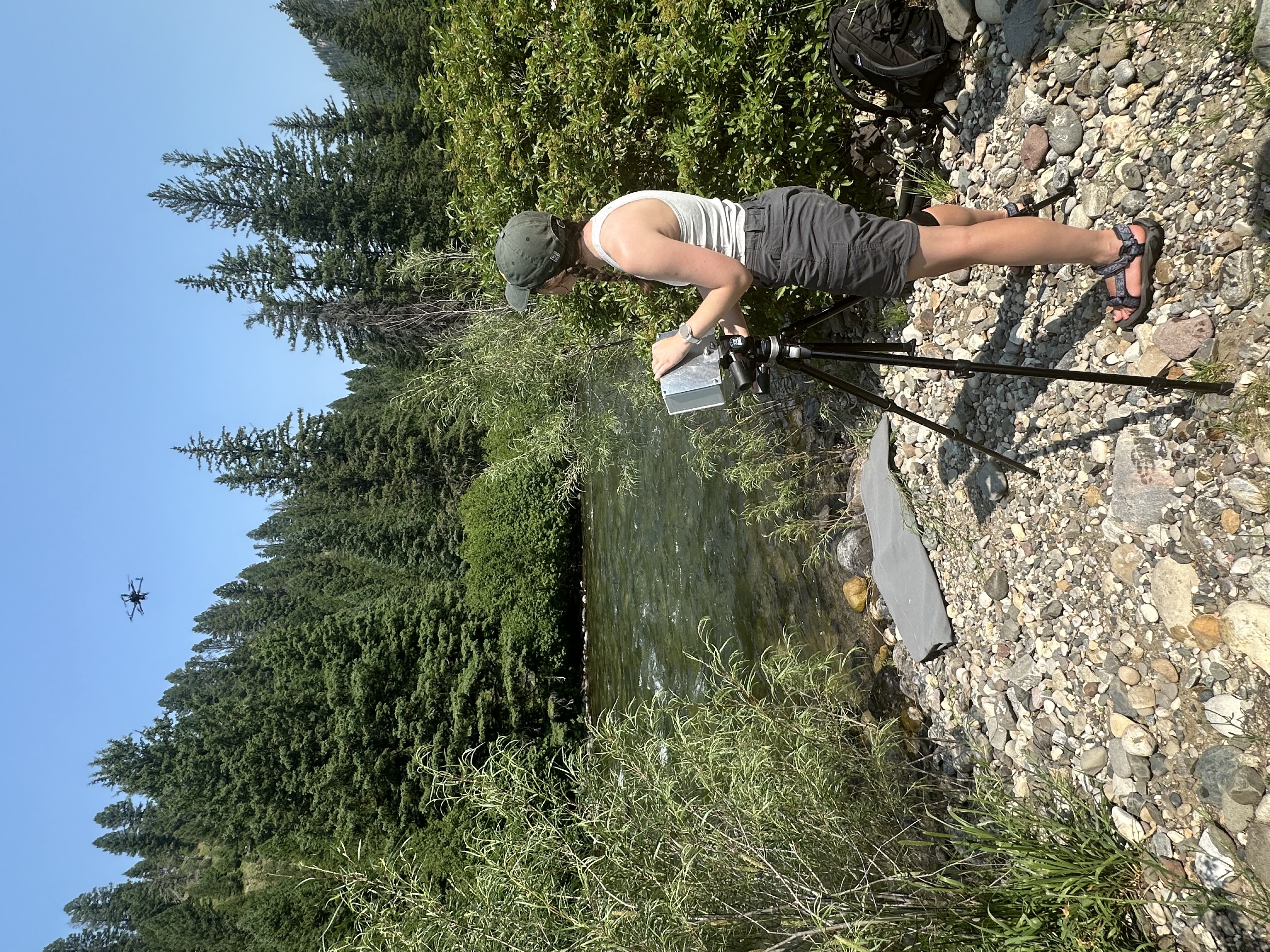
Significance: Montana is home to many scenic and wild rivers that are heavily used for recreation, tourism, and as a source of fresh water. Unfortunately, many of these rivers experience frequent blooms of filamentous nuisance algae that grow in response to a combination of nutrient enrichment, warming waters, and other anthropogenic causes. We have developed a combination of remote sensing techniques, including hyperspectral imaging systems mounted on aerial drones and custom multispectral imagers, that can detect and estimate the presence, severity, and spatial extent of these blooms. The ability to measure other river characteristics, such as depth, width, and substrate type, are key to improving estimates of algae abundance. Objectives: The objective of this project is to help us improve our water quality monitoring methods by working on the development and characterization of our custom multispectral imagers along with processing data previously collected along Montana rivers to measure key river characteristics. Role of REU Participant: Students will participate in further developing, calibrating, and characterizing our custom imagers. Participants will also analyze image data collected along the Gallatin River and Upper Clark Fork River to estimate water quality parameters and key river characteristics to improve our monitoring methods. Prior experience with imaging systems is helpful, but not required, as is interest in optical systems design and image analysis with MATLAB or Python.
Design and Simulation of Fiber Integrated Photonic Devices (Mentor: Prof. Parvinder K. Gill)
Significance: This project addresses a critical challenge in next-generation photonic integration: achieving efficient, low-loss coupling between optical fibers and miniaturized photonic devices. By integrating photonic structures directly onto optical fiber tips, this enables compact and robust systems in which light manipulation and sensing occur at the point of delivery. This approach can significantly reduce alignment complexity, and packaging cost compared with conventional free-space or chip-to-fiber coupling schemes. The project further leverages recent advances in two-photon polymerization direct laser writing to fabricate three-dimensional micro- and nanoscale photonic structures directly on fiber end faces. This capability overcomes complex fabrication and under etched process via fabricating 3 dimensional complex structures in a single step. The outcomes of this work support applications in environmental sensing, biomedical diagnostics, and high-speed optical communication, while contributing to compact and efficient photonic interconnects. The project also advances the understanding of fiber-integrated photonics and helps enable the transition of lab-on-fiber concepts into practical, real-world systems. Objectives: The primary objective of this project is to design, simulate, and optimize optical waveguide cross-sections that maximize optical power coupling between standard optical fibers and integrated photonic devices. The project will focus on developing functional photonic structures directly on fiber end faces, with particular emphasis on minimizing coupling loss and improving mode matching at the fiber–waveguide interface. Optical waveguide cross-sections and fiber-tip photonic structures will be designed and simulated to maximize optical power coupling and mode matching between fibers and integrated photonic devices. Photonic design and simulation tools (e.g. Comsol and Ansys Lumerical) will be used to analyze optical mode profiles, coupling efficiency, and fabrication tolerances. In a future step, functional photonic devices will be fabricated on fiber tips using two-photon polymerization direct laser writing and evaluated through optical characterization. Role of the REU Participant: The REU participant will receive hands-on training in photonic design and simulation tools to model and optimize photonic structures. The student will design waveguide geometries, analyze optical mode effective index, mode confinement and propagation loss. The participant will design an optimal taper for the efficient coupling from multimode to single mode waveguides. Time permitting, in addition to simulation-based work, the participant will assist in the fabrication of photonic devices on optical fiber tips using two-photon polymerization direct laser writing. Prior experience with 3D design tool and python programming would be useful but not required.
Optical Metamaterial Characterization (Mentors: Prof. Wataru Nakagawa, Prof. Parvinder K. Gill)
Significance: The Nano Optics group is developing and testing nanostructured composite optical materials (metamaterials) with engineered polarization properties for sensing and other applications. The optical properties including polarization characteristics of these devices must be thoroughly measured and analyzed in order to understand their performance and give feedback to the design and manufacturing processes. Objectives: An optical characterization system will be used to measure the spectral and polarization properties of the metamaterials under test. As needed modifications or improvements to the system will be implemented, including laboratory automation and signal processing/analysis tools. Role of REU participant: The REU student will be trained on the operation of the optical characterization system, assist in its calibration and testing, perform measurements on fabricated metamaterial devices, and potentially assist in making improvements to the system. Prior experience with Matlab, LabView, polarimetry, and/or benchtop optical measurements desirable but not required.
Machine Learning Analysis of Satellite Images to Predict Effects of Fire on Vegetation (Mentor: Prof. Brad Whitaker)
Significance: The threats posed by wildfire to communities and ecosystems are growing annually. Wildfire smoke poses public health danger that disproportionately impacts rural and underserved communities. Landscapes that have suffered wildfire damage are less capable of supporting ecosystem function. Wildfire threat will not lessen in the coming decades, and prescribed fire — the controlled application of fire under specified weather conditions to restore health to ecosystems that depend on fire — is increasingly employed and needed to mitigate and manage wildfire risk. Objectives: In this research project, the Whitaker Lab will develop machine learning algorithms to predict the impact of prescribed fire on vegetation using satellite data. This will enable community decision makers to understand the impact of a proposed prescribed fire before conducting the burn. Role of REU participant: The REU participant will be expected to learn about satellite data extraction and machine learning techniques. The student will curate a dataset of pre-burn and post-burn satellite images, analyze the images to learn about the state of vegetation pre- and post-burn, and apply machine learning analysis to predict the post-burn vegetation state based on the pre-burn satellite images.
Underwater Machine Vision for Scene Characterization and Anomaly Detection (Mentor: Prof. Brad Whitaker)
Significance: Autonomous unmanned underwater vehicles have the potential to support many applications, including national defense, autonomous exploration and navigation, and search and rescue missions. One major problem inhibiting general robotic submarine systems is that they are often expected to be deployed in many different, and sometimes never-before-seen, environments. Such environments include human-made facilities, freshwater lakes, coastal seawater, and the deep ocean. The visual background and types of anticipated objects associated with different environments may make it infeasible for a single perception algorithm to perform well in all circumstances. Objectives: In this research project, the Whitaker Lab will create a framework for environmentally aware computer vision. Using such a framework, the algorithm will sense the current environment and rely on training data from a similar environment to make perception inferences. We hypothesize that an adaptive perception algorithm will lead to greater success in identifying anomalous underwater objects. Role of REU participant: The REU participant will be expected to learn about machine vision and transfer learning techniques. The student will also collect and label data from multiple underwater environments in order to train different vision algorithms. This work will enable the submarine to identify targets of interest, including anomalies, in labeled and unlabeled data collected using underwater cameras.
Autonomous Tractor Guidance and Safety Systems Using Open-Source GPS and Embedded Vision (Mentors: Prof. Paul Nugent, Prof. Brad Whitaker)
Significance: This project focuses on developing and integrating open-source autonomy and safety technologies for agricultural tractors, combining precision guidance with real-time obstacle detection. Using AgOpenGPS, an open-source precision agriculture guidance platform, students will build a tractor guidance system capable of centimeter-level accuracy using GPS RTK corrections from the Montana State Reference Network. In parallel, students will deploy an embedded RGB-D (color + depth) vision system with onboard AI to detect objects in front of the tractor. Together, these systems address critical challenges in modern agriculture: reducing operator workload, improving field efficiency, and enhancing safety around people, equipment, and infrastructure. Objectives: The primary objectives are threefold. First, design and implement a functional tractor guidance system using AgOpenGPS, including mechanical mounting, steering actuation hardware, electronics integration, and connectivity to RTK correction services. Second, develop and deploy an object-detection pipeline on a Luxonis OAK-4D camera, leveraging its onboard AI processor to identify obstacles in real time using RGB and depth data, with an option for additional processing on a Nvidia Jetson Orin. If these milestones are completed by mid-summer, a third objective is to integrate the guidance and vision systems to create an autonomous safety feature, an auto-stopping capability that halts the tractor when an object is detected in its path. This integration will require coordinated software, electrical, and mechanical interfacing across the tractor, camera, and AgOpenGPS ecosystem. Role of REU Participant(s): One to two REU participants will work closely with faculty mentors and the MSU Horticulture Farm staff. Students will gain hands-on experience in mechanical design and fabrication, electronics and embedded systems, GPS/GNSS and RTK positioning, and applied machine vision. Participants will contribute to hardware assembly, wiring, and system integration; configure and test AgOpenGPS with live RTK corrections; train and deploy object-detection models on the OAK-4D platform; and, if time allows, collaboratively develop and test an integrated auto-stop safety system. This project emphasizes interdisciplinary engineering, open-source development, and real-world deployment in an agricultural setting.
Optical Sensing of Atmospheric Aerosols and Clouds (Mentor: Prof. Joe Shaw)
Significance: Understanding atmospheric aerosols and cloud properties is critical for environmental science and climate research. This project focuses on the optical measurement and characterization of aerosols and clouds using advanced sensor systems. The work contributes to a larger, multi-institutional and multidisciplinary study that includes the development of smart optical sensor systems integrated with embedded machine learning and artificial intelligence algorithms. These systems will be used to characterize fire fuels before and after prescribed fires and to characterize the physical properties of the smoke emitted by these fires. This work is conducted in partnership with studies of the societal impacts of prescribed fires and people’s perceptions of prescribed fires under different levels and types of information. Objectives: Optical sensor systems will be deployed outdoors to measure properties of aerosols and clouds in the atmosphere. Role of REU Participant: Participating students will assist graduate students and faculty in deploying optical and electronic sensor systems to measure properties of clouds and other atmospheric aerosols. Laboratory measurements will also be performed to calibrate the sensors and to better understand outdoor deployments. Data from laboratory and field measurements will be analyzed and intercompared to obtain cross-validated datasets.
Application Information
- To apply, please use the NSF Education and Training Application portal (https://etap.nsf.gov/). Our program is listed as "Our sustainable future: Remote sensing, smart systems, and innovative devices (Montana State ECE)."
- As part of the application you will be asked to provide a ranked list of the available projects. We will consider your top three choices in the selection process.
- Application deadline is February 18, 2026. Offers will be made on a rolling basis starting in early March 2026 until all positions are filled (likely in early April 2026).
Questions? Please contact Prof. Wataru Nakagawa (nakagawa@montana.edu) or Prof. Bradley Whitaker (bradley.whitaker1@montana.edu).